permanent exhibition
Radek Pilař
the prominent Czech artist renowned for his work in illustration, graphic art, painting, photography and film
You can access this exhibition at any time during opening hours.
Buy tickets online or at the reception desk.
Do you have a question? Contact us!
recepce@sladovna.cz
+420 771 518 989

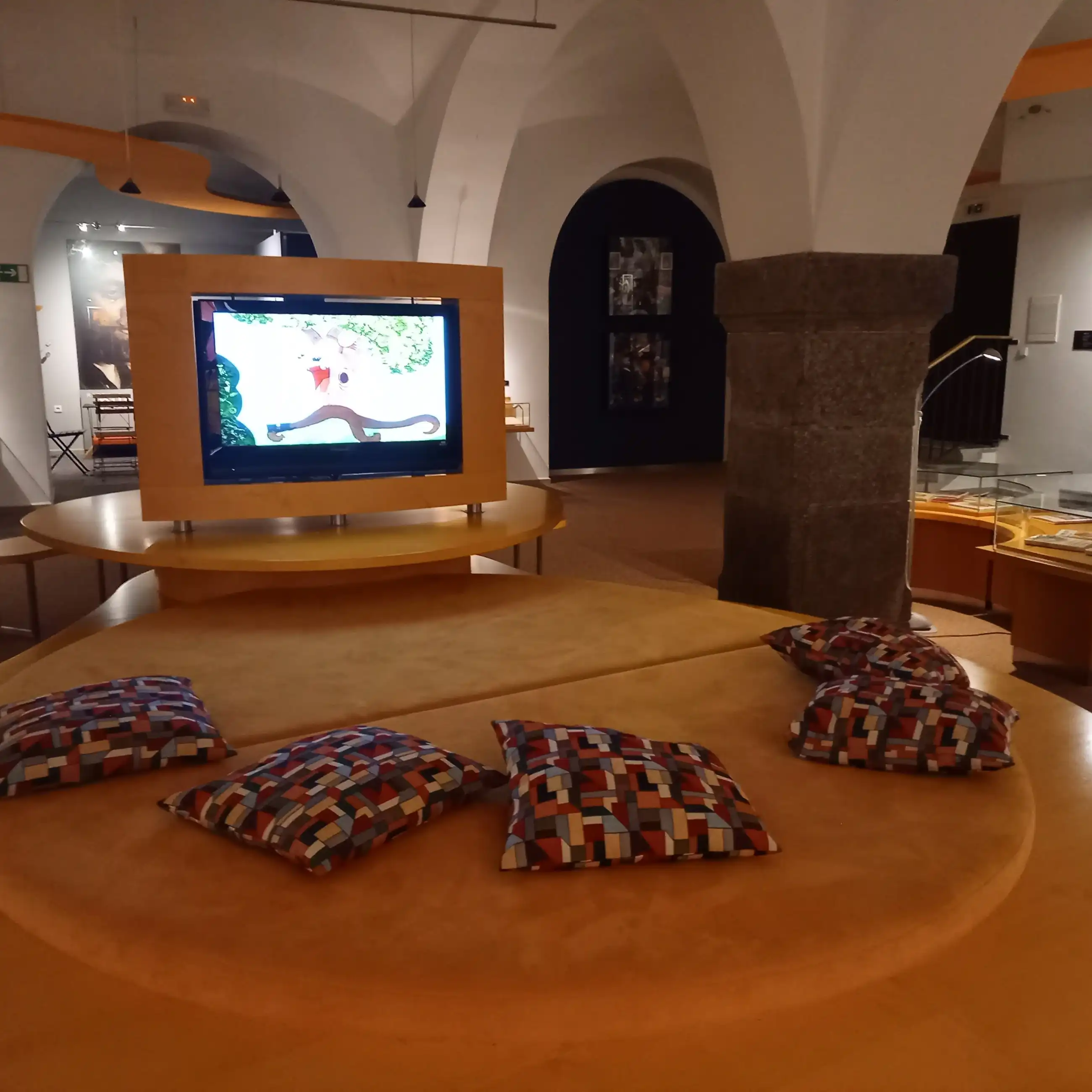
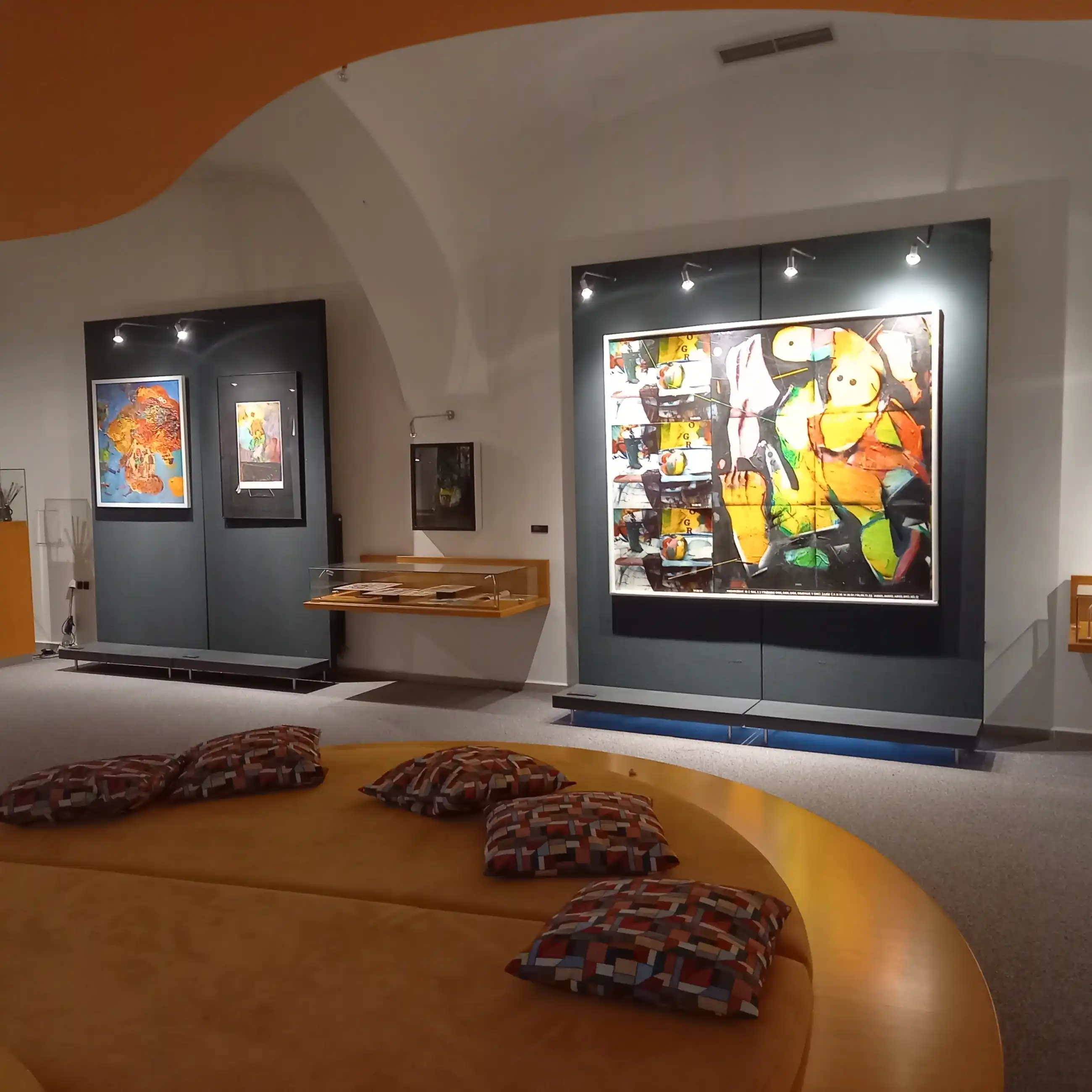
Come and appreciate the artistic expression of the author of the famous characters Rumcajs, Manka, Cipísek, or Večerníček. Your children will love to watch the fairy tales from the sofa in the gallery, while you can explore the exhibition at your own leisure, or you can all sit and watch the fairy tales together.
The work of Radek Pilař served as an inspiration for Pilariste - an hands-on exhibition for toddlers and young children. And aslo for Radek Pilar Studio - a creative space for imagination and creativity through the eyes of Radek Pilař.
You can access this exhibition
at any time during opening hours.
Ticket price
70 Kč / one person
Take a peek inside
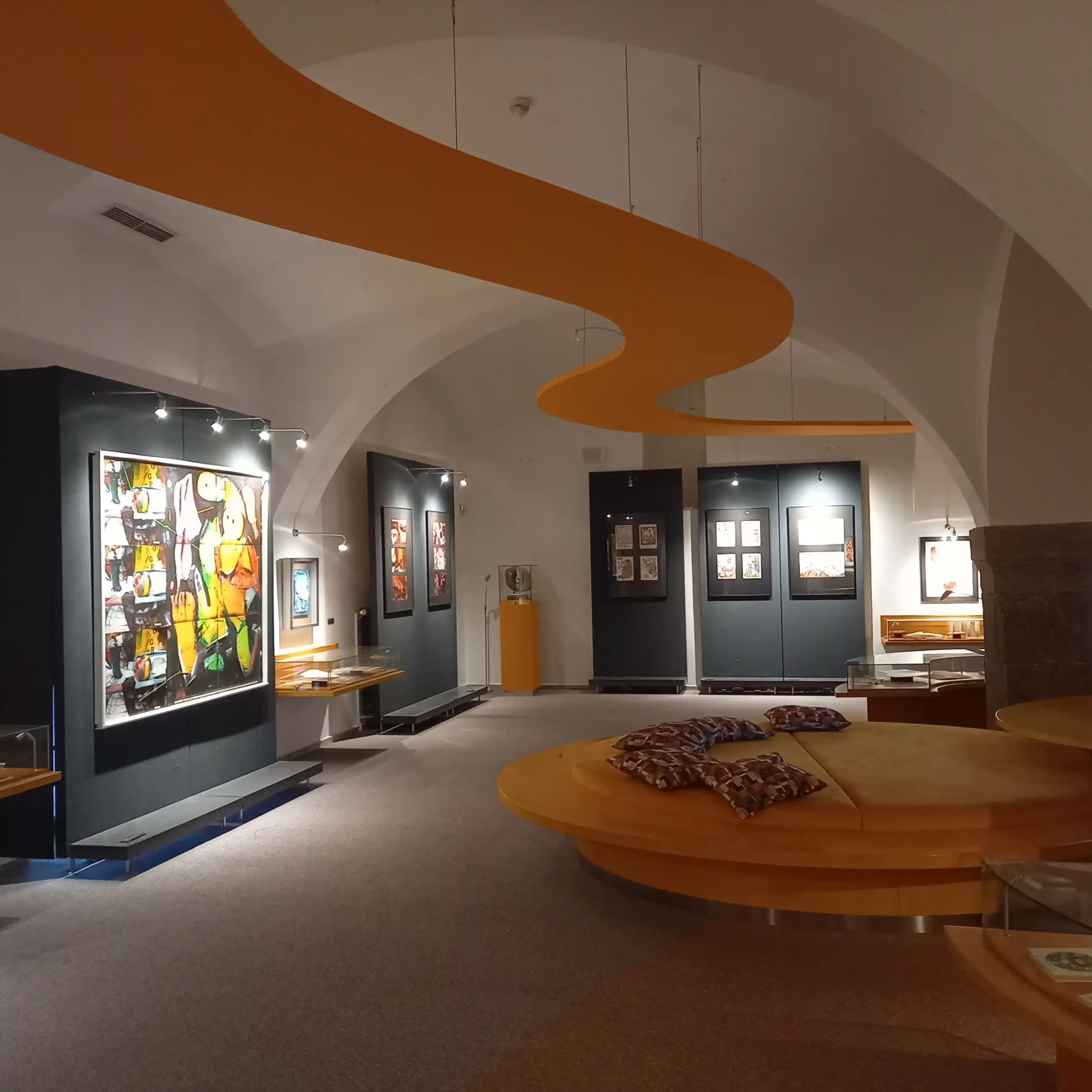
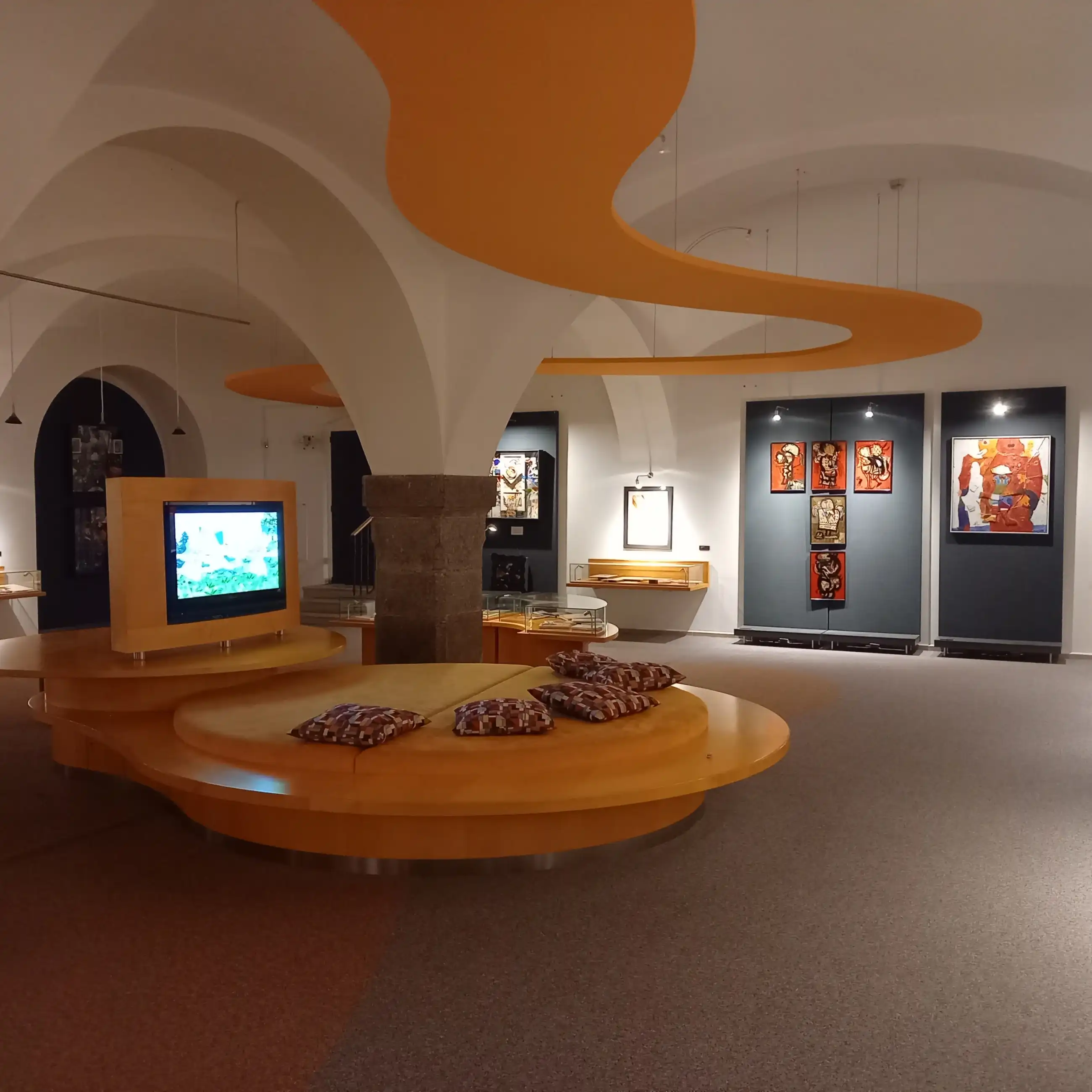
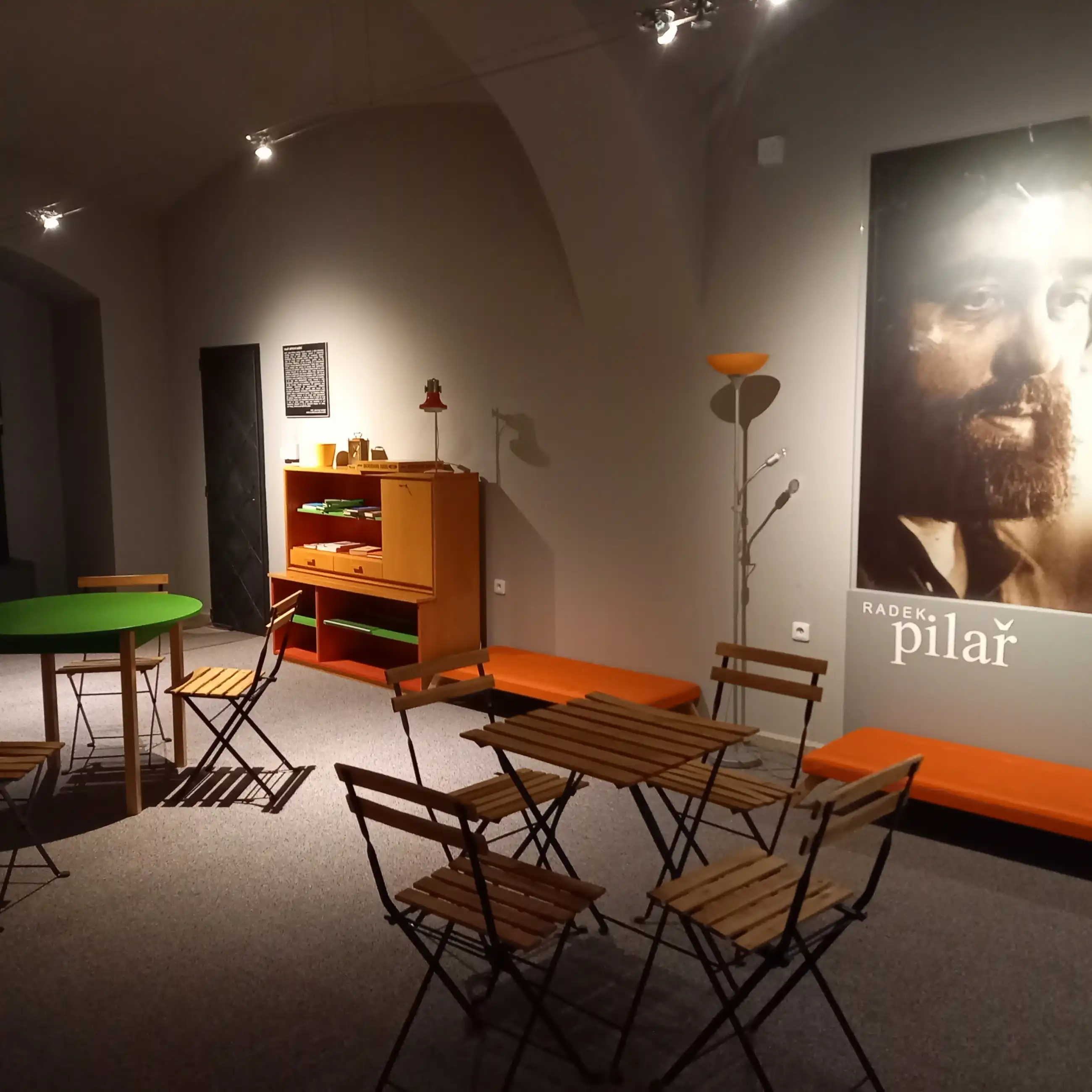
Radek Pilař
April 23, 1931 – February 7, 1993
"The woods around my hometown, the river, the sky, my grandmother, my grandfather, that was the gift of a lifetime. The landscape of my childhood is filled with love," recalled Radomil Vojtěch Rokůsek, a native of Písek, known to the public as Radek Pilař.
The painter, illustrator, graphic designer, photographer, screenwriter and filmmaker was born on April 23, 1931 to Květoslava Rokůsková, an unmarried seventeen-year-old. He grew up in a small house at 51 Na Houpačkách Street in Písek, where, in addition to his mother, he was cared for by his grandparents, who helped their underage daughter with her difficult life situation. From an early age, he showed artistic talent. At the age of two, he drew a picture of his mother, and when he started attending Boy Scouts, he kept richly illustrated journals full of boyhood adventures. During the Second World War, his biological father re-connected with the family after eleven years with a wish to marry his mother. She accepted and the boy was given the surname Pilař. During the war, the family lived in Tábor, where his father had a button factory. However, the marriage did not last long and ended after three years.
After the war, Radek and his mother returned to his grandparents in Písek, where he began attending the grammar school. There, he formed lifelong friendships with the poet Josef Brukner, the architect Vladimír Jestřáb and the screenwriter Jaroslav Papoušek. After graduating from high school, the career choice was clear – the Academy of Fine Arts. Radek Pilař also successfully passed the exams for the Academy of Arts, Architecture and Design to study under Emil Filo, but decided instead to study under Vlastimil Rada at the Academy of Fine Arts.Arts.
In 1957, he married his classmate Růžena Tikvová, but they soon divorced by mutual agreement. During these years, thanks to a trip to the Netherlands with the theoretician Vojtěch Václav Štech, he discovered the work of the Cobra group, which greatly influenced him. After graduating at the Academy he abandoned "dirty painting", as he writes, and began to work with colour. In 1962, he experienced a painful loss – his mother died. “I feel deeply sorry for my mother, she was too young to die and too young to be happy,” he commented upon the loss. A year later, he married for the second time, to Ludmila Spilková, with whom he remained for the rest of his life. Thanks to a trip to Paris and participation in the 2nd Youth Biennale, he became fully acquainted with contemporary art, including film experiments.
In the first half of the 1970s, he began to make his first films for children for the Czechoslovak Television and Krátký film. Thanks to this collaboration, the timeless theme song of Večerníček was created in 1965 under the direction of Václav Bedřich. At the same time, he co-founded the well-known children's magazine Sluníčko and contributed to another one called Mateřídouška. His first illustrations were published in the book Rybky, ptáčci proměnáčci (Fish, Birds, and Changelings) by the State Publishing House for Children's Books.
A year later, his daughter Barbora was born. Shortly afterwards, in 1967, he created the illustrations for the famous character Rumcajs the Robber, based on the literary model by the writer Václav Čtvrtek. Together with director Ladislav Čapek, they filmed 53 episodes. "I am encouraged by the audience response, people believe in the cartoon hero who fills them with a desire for justice and family life," he remarked. Over the next five years, Pilař held countless exhibitions across the country, including in Písek, Kroměříž, Olomouc, Cheb, Litoměřice, Svitavy, Vsetín and Prague... And also abroad, where he was no less successful as evidenced by his being awarded the Order of the Smile in Poland: "When a plebeian becomes a knight, that is an honour," he said with pleasure. In addition, he received an Honorary Certificate for the best book of 1974 in the then Federal Republic of Germany, a prize at the animated film festival in Quadajara, Mexico, as well as at the ARS Kroměříž, an Honorary Mention from the Czech Literary Fund for the film Kluci, pozor, červená, and was placed on the Honorary List of the Hans Christian Andersen Award. During these years, he went on an inspiring trip to Japan.
At the end of 1979, his second daughter, Marina was born. At the same time, he became increasingly involved in experimental films and photo-assemblage. He also won an award for the best illustrator of 1981 in Opava. In addition, he received the bronze medal at the IBA in Leipzig. In Sweden, with the help of his friends, he created experimental films. In 1985, together with Břetislav Poyar, Jiří Kubíček and Jiří Jaroš, he founded the animation department at FAMU in Prague.
He became completely absorbed in video production and together with Josef Brukner and Jiří Pilka, he created the video composition Musica Picta. Radek took an active part in the political revolution and, together with students, filmed interviews with artists at the Mánes in Prague. At the same time, thanks to his film Botička (Little Shoe), he was very pleased to receive the Silver Dancer Award for the best animated film at the Huesca Short Film Festival in Spain. In 1990, he became an honorary citizen of the city of Jičín. At the same time, he founded the Department of Animation and Video at FAMU and the Association of Video and Intermedia Production, which was followed by the establishment of the Video Production Studio at FaVU in Brno.
Two years after the Velvet Revolution, Radek Pilař held his last exhibition, Absolutní opona (Absolute Curtain), at the Čapek Brothers Gallery in Prague. He became a member of the Council of the Union of Visual Artists, the Artistic Council of FAMU, the Artistic Council of the Ministry of Education and the Media Archive. On February 7, 1993, his weak heart could not withstand such a hectic work pace and he died of a heart attack. Radek Pilař is buried at Vyšehrad cemetery in Prague.
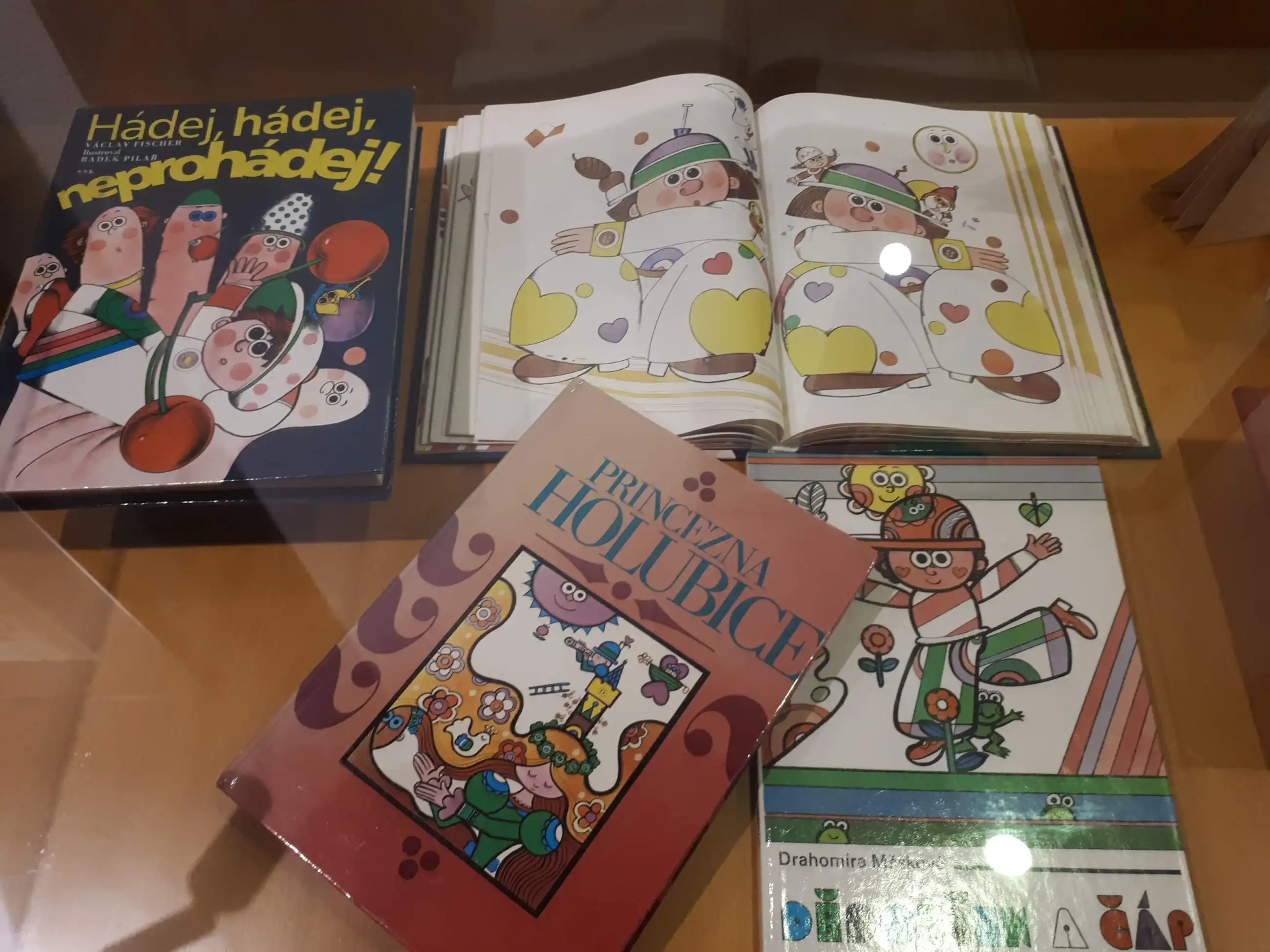
Radek Pilař had over 40 solo exhibitions, illustrated over 50 children's books that have been published all over the world, created around 40 short films and bedtime cartoons called Večerníček and made over 30 videos and video art – he is acknowledged as the founder of this movement in the Czech Republic.
© text by the Pilař family